Saturday, December 18, 2021

On Frida Kahlo's 'Wounded Deer' and after Rilke’s Sonnet to Orpheus 2:10

A couple of poems I wrote for my poetry students. These students are a long way from here, and we are a long way from them — a dynamic of the times. I am always wary of the 'ambient intimacy' of the internet, but I share these in the spirit of community. All poetry is a series of departures as well as arrivals, suggesting movement — flow.  The conversations that develop between 'artworks' are inevitably political and ethical ones, and if we write out of colonial spaces (regretfully, disturbingly, and in grim reality), a series of responsibilities arise that are often in tension with the 'aesthetics' of a piece. I refuse 'aesthetics' as a basis of anything generative, but contend with it every time I write a letter, a word, a line... and every time I use any of the senses available to me. This is an act of dissension whose irony is made even more emphatic through the use of this technology (computer, internet etc) to access 'art' and to comment and respond to it.

See Kahlo's painting here. And here's an anti-ekphrastic act, maybe:


Not On Frida Kahlo’s ‘Wounded Deer’, Not Really?


When the bow hunters sported the deer out of the woods near Gambier

I was not thinking of Frida Kahlo’s ‘Wounded Deer’, which I do now.

This is not appropriate in so many ways, but maybe it is in others.


When the pick-up truck with the stag in the back secured so the antlers

were safe — wall trophy, obviously — but the hindquarters flopping

and bouncing on the open tail-gate, hooves kicking off the road’s asphalt


(and I imagine sparks but it was flecks of staling blood), roared

past me on the road through the village, I was not thinking of Frida

Kahlo’s ‘Wounded Deer’, which I do now. Maybe I should have back then?


But now I am thinking it through, in another hemisphere, over fifteen years

later. I am trying to be the deer and the stag but not be Frida Kahlo —

I would never try to do that. Which makes me wonder as I unloose


arrows out of my skin — nine times I quiver, nine times I transfer

my essence to a tree, nine times I shape the memory into something visceral —

if I am really seeing the past now? There are no deer here, but there are


kangaroos and they suffer similar fates. I cannot see Frida Kahlo’s

head on a kangaroo, I cannot build the symbolism, archetypes and set

of personal references. I won’t mystify. If the sea at the end of a wooded path


is forced into the sky, so too are the hills of the valley into a different

but intimately connected sky. Wrong images. I wonder about translations of ‘karma’,

and reach for my feet to see if they are secure on an earth that turns fast —


or maybe it’s just turning at the necessary speed. Neither fast nor slow.  Maybe

that speed will stay the same no matter what the miners, industrialists and adventurers

do to it in all our names. It frightens me (and honestly, I don’t frighten easily —


well, not in a personal sense, anyway) that I have nothing to do with Frida

Kahlo or her deer-stag or her injury or bare forest or fetish for arrays of nine.

But then, why would I use a word like ‘fetish’? What am I painting here?


            John Kinsella


Rilke’s Sonnets to Orpheus: version  after 2:10 — a mimesis


How we machine machines

might be at the root of the problem,

a root system of fibre-optics

and nanoparticles, the equilateral


disjunctions in application

of field-work. We have made it part

of our avatars not only via imposition

but by unnatural selection:


each lyrical strain we tune

into our ‘feelings’, remade as satisfaction

and compliance of mystery.


Speech to text slips past the inexpressible.

Expansion of services is not the music

we associate with ‘ecology’ — house of the word.


            John Kinsella


Monday, November 15, 2021

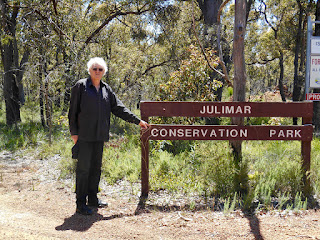
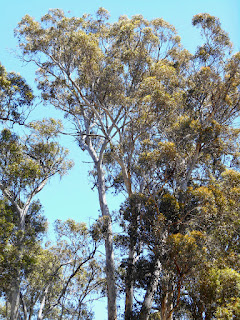
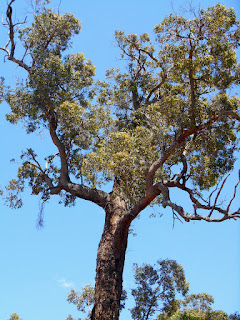
Was out at Julimar Conservation Park on Sunday with Tracy. A few photos and a poem in support of the mixed woodlands/forest (below). This article from Landscope is useful regarding some of the colonial incursion/history of the place and its importance in the now. I don't agree with some of the approaches in the article (especially regarding four-wheel driving), but the piece does highlight the importance of the 'park'. It is vital we keep focus on the forest and the threat it is under from Chalice Mining. Also see this article at Hike West regarding the threat to environment from Chalice.


Investor Notes for Chalice Mining’s Persecution of Land at Julimar

‘sombre woods’
The Argonautica

With settler familiarity the forest is brow-beaten
by four-wheel drives and pig hunters. Pigs are the lament-
excuse-justification for blood-letting, a way around
circumventions. And then there’s the farm turned
into a minefield — a mine in a field, or rather
the exploratory drills for a mine in a field
that will dilate into the forest if the company
has its way with relevant government agencies —
the lamenting and unravelling of ‘green tape’. In case
you shoulder wonder about deployments of language
for investors, try ‘Gonneville Intrusion’ as the name
for these activities. Or, ‘strategic deposit’ of ‘critical
minerals.’ Intrusion strategic critical deposit. And
‘expand footprint’. Definition. Seven rigs — diamond
and reverse circulation. Farmland entrée. And then...
and then the full run of revelation with missionary zeal.

And this poem-addendum to petition that lives in the mind
of the forest and its readers — the wandoo and jarrah
and marri trees in full awareness of what lies
beneath in the ‘complex’, speaking with words
that will be extinguished before they can find
a way past investor vocabularies, before they
can upset degrees of separation, the consequences
of portfolios. Oh, blue leschenaultia
and kangaroo paws were still flowering
and a light breeze was a sombre ocean
in the mixed woodland when we visited
over on Sunday — as the company’s advance 
gathers pace, as the ‘maiden resource’
PRs its heroics, buys into community,
spreads news of inevitability, of success.


John Kinsella

Wednesday, November 10, 2021

Save 'Julimar State Forest'/Julimar Conservation Park from Chalice Mining!

I have just put this petition up at Change.Org for any of you willing to sign (see below plus link). Addressing governments, especially when they are so embedded with the mining industry, is a forlorn and fraught process, but every peaceful method must be tried:

Chalice Mining is attempting to develop a nickel, copper, cobalt and PGE mine at the 'Gonneville deposit' near the 'Julimar State Forest'/Julimar Conservation Park, Western Australia. Their end of 2020 statement claims — 'Julimar PGE-Ni-Cu-Co-Au discovery' [is] 'advancing rapidly to maiden resource'. The company is targeting the 28 000-hectare Julimar Conservation Park as part of their 'exploration' and potential exploitation of the 'deposit'. As cited in the Financial Review (November 9th, 2021) regarding exploratory drilling in the forest, 'Mr Dorsch said he was expecting approval to drill soon and the company was “raring to go”.'

Despite claiming it's all for the well-being of the world (minerals useful for carbon-reducing technology — 'green technology'), the destruction of the ecologically vital and unique Julimar forest will be a crime against the environment and the biosphere. The forest must be protected against such a flagrant rapacity that is ultimately based on nothing more than profiteering and indifference to environmental world-health.

The forests and bushland of Western Australia are already under great pressure from mining, and we plead with you to prevent this activity. We have an obligation to all life on this planet to prevent the damage and destruction of remaining habitats.

Link to Protect Julimar Forest petition. [Note the anti-tree propaganda in the Financial Review article, aligning the area with middle-class wealth (which is untrue), attempting to divide and conquer via mining labour demographics when it's the mega-wealthy who most benefit from such mining.]

Also, I beg you all to consider the threat to the Manning Ridge from mountain-biking proponents. See and look at 'concerns'. And here is a poem in support of that campaign:

Manning Ridge, Beeliar Regional Park, Whadjuk Noongar Boodja

Parrot bush is a flowering of white-tailed
black cockatoos is a flowering of limestone 

is a flowering of the essence of terrain. 
Mountain bikes are not biodiverse, 

mountain bike trails are not circulatory 
systems, mountain bikes and the trails 

made for them to traverse bring no rare species 
back from the brink, bring no warmth 

or comfort to country. Mountain bikes
compress the ridge, break the back

of habitat. When riders ride into their future
they delete the future for so much else.

Bandicoots and lined skinks know I visited
as a child, trying to hear what they had to say —

their memories are passed on through
limestone, through woodlands

and shrublands. I won’t forget
their gifts. Now I speak out.

Parrot bush is a flowering of white-tailed
black cockatoos is a flowering of limestone 

is a flowering of a future.
Remember. Act. Remember.


John Kinsella


Graphology Lambent 28: for the protesters against the Garzweiler lignite mine

False light false warmth the pit dilating
to consume trees and villages, filling

atmosphere with false signs false breath —
that dirty heat that warms only death.

But those of you sitting to block ‘progress’
will bring life with every delay — you redress

our failure as the cranes migrate.


John Kinsella

The destruction of habitat and contamination of the biosphere are such a multiplex concurrence of 'events' that unless we resist all of these assaults at once, and say enough to all such behaviour and activity, they will overwhelm the planet.

Saturday, September 11, 2021

Poem in Support of the Sacred Bushland of Walwalinj ('Mount Bakewell') and the Ballardong People's Relationship to Their Country

The Euphemisms of Trails: Save Walwalinj from the Mountain Bike Trails Proposed by the York Shire and the Western Trails Alliance


It all falls by waysides

in naming ‘prosperity’ —

whose is rarely in question

because it’s a state of being

we can’t afford to question?


Thunderbird reacts!


Wheatbelt ‘alpine’ seems

contradictory in the scouring,
but all definitions up for grabs

as vested parties push bikes

hard up the mountain:


parodying watershed,

parodying ley-lines,

parodying ecotones,

parodying lines of naming

parodying duration.


Thunderbird reacts!


Adrenaline’s fallout

over orchids so rare...

last refuge, plethora, haven.

Life out of reach

infuriates


those who claim

what’s not theirs to claim,

but they know the ins

and outs of colonial law.

Read the fine detail —


the letter, the clause... see

point... sub-sectioned.

Behind closed doors

it may seem to some

that Ballardong people


are a ‘hurdle to clear’ — a jump

on the path to stimulus. Protocols

written by... see government

guidelines. See trails carved

out of a purple mountain.


Thunderbird reacts!


            John Kinsella


Friday, August 6, 2021

Save Walwalinj ('Mt Bakewell') from Further Exploitation and the Destruction of Rare Habitat

 Dear Shire President (of York, Western Australia)

I wish to vigorously protest the plans to exploit the sacred and exceedingly rare and fragile environment of Walwalinj ('Mt Bakewell') as indicated by your declarations to the ABC. The mountain has already been placed under stress by clearing for 'recreational' as well as agricultural purposes, and the habitat will not cope with more stress. There are orchids so rare up there they exist nowhere else. The environment should be protected and not exploited, and its sacred essence respected. 

I have spent my entire life writing the region and known the environment of the 'Dyott Range' (another inappropriate renaming) and surroundings intimately. This is a 'greenwash' act that claims 'nature tourism', which would simply mean further degradation of a fragile and unique ecosystem. 

Cautious walking and care are one thing, but to 'open up' to mountain biking is to consign the bush to destruction. Recently talking on the email with an environmental officer regarding degradation of Perth Hills forests, they noted that the greatest damage came from mountain biking. This opens the door to so many abuses of the habitat. Walwalinj isn't a 'resource' to be 'capitalised' on. In a world suffering under the weight of such exploitation, surely an effort can be made to conserve rather than exploit?

I ask you to reconsider and take this informed protest on board. I will certainly use all my energy, contacts and writing ability to protest this constantly. It is a wrong thing you are aiming to do.

I will speak about this at every public opportunity I get in the wheatbelt, and that will be sooner than later — that is my responsibility, and I take it seriously.

Sincerely,


John Kinsella

Tuesday, July 13, 2021

Supervivid Depastoralism

 A new book for those interested — Supervivid Depastoralism.


Cover Painting by Stephen Kinsella


Book description: I don't sleep much or very well (I have a recent book of poetry entitled Insomnia!), but, when I do, I often have supervivid dreams. It is said that in the time of Covid-19, many people are speaking of having more vivid dreams than usual, and though the poems in this manuscript are not-specifically 'Covid-19 poems', at certain points of the manuscript they certainly make contact with this overwhelming reality and condition of crisis. But this is essentially a book in a lifecycle of trying to confront and consider the impacts of colonial agribusiness mono agricultural practices on Australia, and how it is or isn't possible to write about these issues within the conventions of the pastoral tradition of literature. Can 'pastoralism' and environmentalism intersect in meaningful ways or is it all a colonial ruse? As a committed environmentalist and human rights landrights justice campaigner, my poetry necessarily considers the place I work out of (largely wheatbelt Western Australia), and the problems of writing poetry 'about' rurality and ecology, as well as addressing the ongoing colonialism. This new book is an attempt to push my anti, post, counter, and radical pastoral to the point where it also becomes a means of considering where agricultural culpabilities intersect with personal histories and behaviours, where creativity that comes out of a critique of invasive and damaging wrongs is in itself up for question. So this is a work of self-critique, questioning, and also aspiration to vividly confront and find ways through this crisis of presence. The 'Australian Pastoral' is a construct, a propaganda device that suits all sorts of oppressive modes, and is easily a place to retreat into even when it is being questioned: I am trying to bring all this into eclogic discussion, to contest it further as part of a long and linguistically diverse process of contestation. This book 'connects' with other books on 'pastoral' I have written over the decades, including other recent work (in progress) on odes and eclogues (longer pieces largely) - but this is a collection of shorter poems. The book could be subtitled: Eclogix.

    John Kinsella

Friday, June 18, 2021

Ecological Benefits Propositions

1. People are ecologically minded to serve their own ends

2. People believe that they have an intrinsic right over an ecology whether or not they have a totemic relationship with that ecology

3. People will damage an ecology to improve their own ecology or the ecology of their perceived community

4. People will address a social injustice that does not directly concern themselves through aligning it with protection of ecology but not if that ecology serves their own powerbase, even indirectly

5. People separate social injustice from justice to ecologies

6. Oppressive power structures will ‘trickle down’ benefits from the exploitation of ecologies while receiving minimum side-effects for themselves while maximising proximity-damage to those who are oppressed

7. Ecological activism will benefit the activist directly or indirectly, even when it benefits us all: this paradox is the empathetically just position designed to be incontestable

8. Ecologies rarely get to speak for ecologies and only do where their direct Indigenous or traditional interlocutors are given a voice over their protection and well-being

9. All being of ecologies give us all equal part and concern in their fate and yet the benefits from damage are lopsided and based on a series of oppressions worked through ‘race’, ‘class’, ‘gender’, and control

10. Ecology is aligned with dwelling and habitation and yet the houses of non-human species are undone or transposed to transfer power from ecology to certain humans or groups of humans

11. Human social structures make control of ecology more effective in order to control subordinate or peripheral parts of those social structures themselves

12. To claim authority and construct laws that have a central alignment with power will undo any ‘rights’ they legislate through controlling the nature of those rights (and the provenance of their being ‘granted’) — and this applies to the ‘protection’ of ecologies that then become reliant on the power demographics in the systems ‘offering’ that protection. Rights are inherent and beyond legislation which consumes those rights in underlying agendas

13. The elevating of human over animals in a conceptual sense will always mean animals will suffer not because humans should be respected less but because animals aren’t respected more — in the same way, ecologies being respected more can’t mean humans are respected less

14. The exploitation of individuals and groups of humans by other individuals and groups of humans (especially through institutions, state apparatuses, and larger social mechanism) relies on control and manipulation of ecologies — removing control over ecologies and allowing them to regain aspects of their autonomy lessens the ability of humans to create structures to systematically control, oppress and impose their ‘law’ on other humans.


John Kinsella